">
">
We are closing this America 250 series by looking once more at the Revolutionary War veterans whose lives did not end with the war, but instead continued into the early settlement of the Western Reserve.
Catch up here: Part 1, Part 2, and Part 3
For the men who lived through the American Revolution, the war shaped more than military service. It shaped where they moved, how they built their lives, and the communities they helped form long after the muskets fell silent.
Trumbull County itself carries a Revolutionary connection in its name. The county was named for Jonathan Trumbull of Lebanon, Connecticut, the only colonial governor to support the Patriot cause and a principal supplier of the Continental Army. According to Katelyn Pfouts of the Trumbull County Historical Society, roughly 200 Revolutionary War veterans settled in Trumbull County. By the 1840 Census of Pensioners, only 32 Revolutionary War veterans remained in Trumbull County.
This fourth and final entry highlights three more veterans and early settlers: Elizur Talcott Jr. of Mesopotamia Township, Sgt. Edward Brockway of Hartford Township, and Isaac Flowers of Vienna Township.
Quick Takeaways
- This final entry follows three Revolutionary War veterans who later settled in Trumbull County.
- Their stories connect Mesopotamia, Hartford, and Vienna townships to the larger story of the American Revolution.
- Each man served in Connecticut units before moving west into the Western Reserve.
- Their lives show how military service, migration, farming, faith communities, and early township settlement often overlapped.
- Several of their graves can still be found in local cemeteries today.
Elizur Talcott Jr., Mesopotamia Township
1759–1835
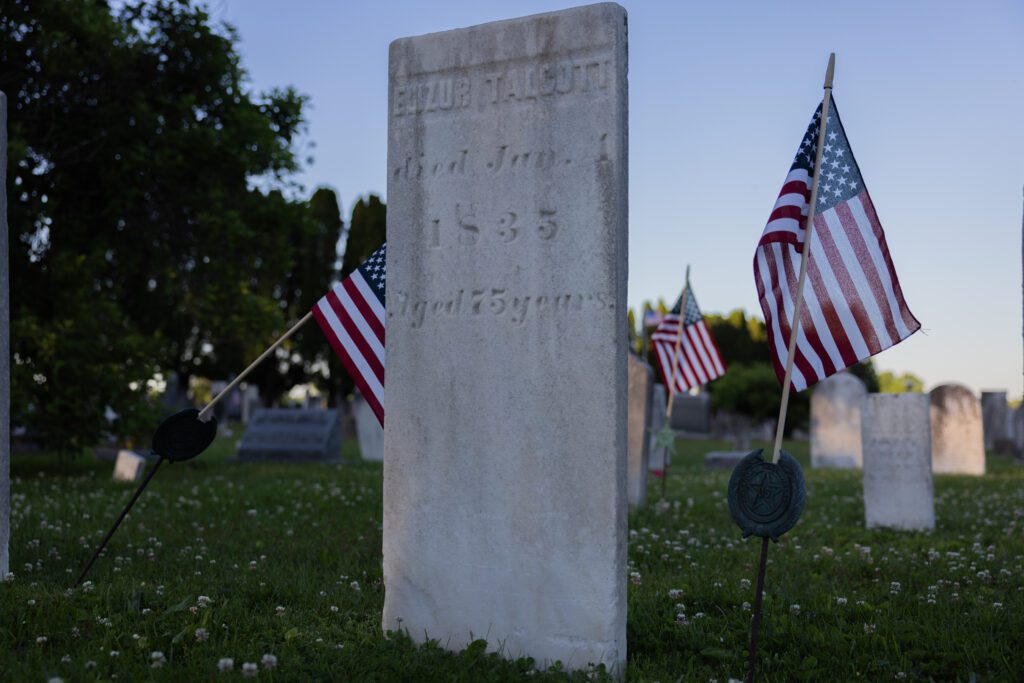
Elizur Talcott Jr. was born April 19, 1759, in Enfield, Hartford County, Connecticut, nearly seventeen years to the day before the outbreak of the Revolutionary War. The third of four children born to Elizur and Mary King Talcott, he came of age just as the colonies entered war with Great Britain.
In the summer of 1776, Talcott enlisted as a volunteer in Captain Parsons’ Company, Colonel Sage’s Connecticut Regiment. The regiment mustered at Enfield and marched to New York, where Talcott was present for the Battle of Long Island in August and the Battle of White Plains in October.
Like many veterans, Talcott left behind only a few details about what he saw. He noted that his colonel had been at Long Island and, after being trapped there, escaped “in a boat on a very foggy morning.” Beyond that, he remained mostly silent about the battles themselves.
Talcott’s service continued after his first enlistment. He re-enlisted in 1777 for several months and again in 1778, this time serving as a substitute for his brother Joseph in Captain Elijah Wright’s Company, Colonel Enos’ Regiment. Under General John Sullivan, Talcott fought at the Battle of Rhode Island on August 29, 1778, the first joint military operation between American and French forces during the Revolution.
After the war, Talcott returned to Enfield. On January 13, 1791, he married Sarah “Sally” Baxter, also of Enfield. The couple lived in Connecticut until 1796, before moving with their nine children to Norwich, Massachusetts, and again to Mesopotamia Township. Likely they were following Elizur’s brother Joseph, who had relocated to nearby Bristol Township a few years earlier.
In Mesopotamia, Talcott lived quietly as a farmer for the last decade of his life. He died January 4, 1835, at the age of 75. Today, he rests in Fairview Cemetery beneath a simple marble tablet inscribed with only his name, age, and date of death.
Sgt. Edward Brockway, Hartford Township
1735–1813
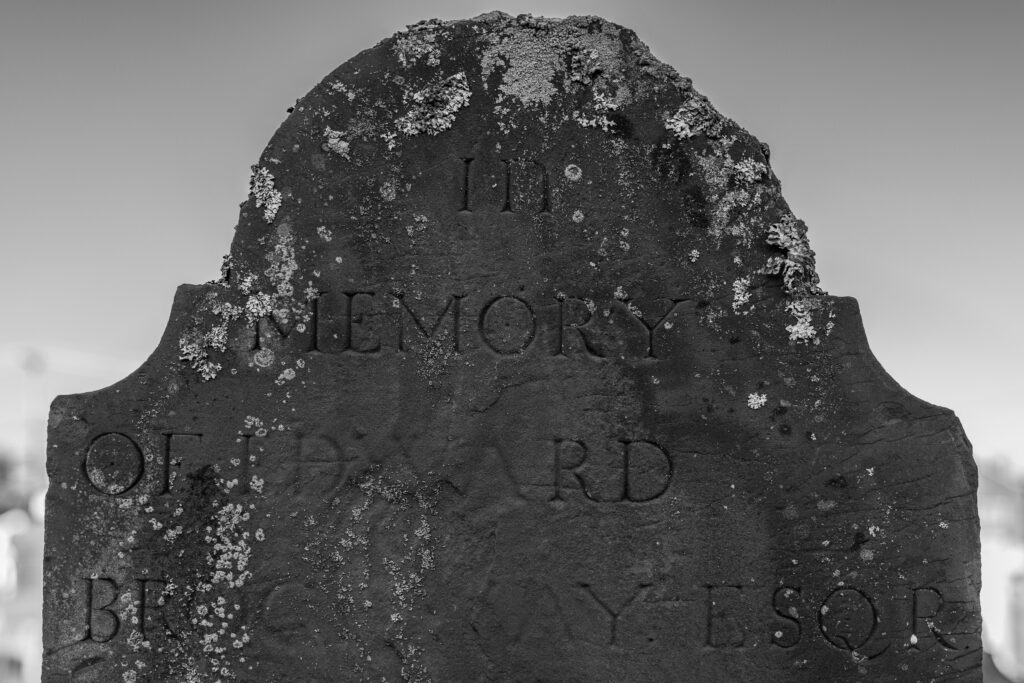
Sgt. Edward Brockway was born November 30, 1735, in Branford, Hartford County, Connecticut, the youngest of four children born to Samuel and Lydia Johnson Brockway.
His personal life was marked by repeated loss. Brockway married Abigail Palmer in 1760, but she died only nine years later. He married Martha Hoadley in 1770, and she too died after only a short marriage. In October 1777, he married Hannah Palmer, his third wife, just days after one of the most important American victories of the Revolution.
That victory was Saratoga, and Brockway had played a small part in it.
During the summer of 1777, he enlisted as a sergeant in Captain Jonathan Caulkins’ Company, Latimer’s Regiment. Assigned to General Poor’s Continental Brigade in Benedict Arnold’s Division, Brockway fought at the first Battle of Saratoga on September 19 and again at the second Battle of Saratoga on October 9.
After his military service, Brockway returned to Connecticut and settled in Hartland with Hannah. Sadly, Hannah died in 1781 at only twenty-four years old. In 1785, he married for the fourth and final time, to Sarah Morris.
In 1799, Brockway left Connecticut with Isaac Jones and Asahel Brainerd for Hartford Township, Trumbull County, Ohio. The three men became the township’s first settlers. Local history says they spent their first night beneath a large tree near the township center.
On September 23, 1799, township proprietor Uriel Holmes Jr. deeded Brockway 3,194 acres of land in Hartford Township in exchange for Brockway’s farm back in Hartland, Connecticut. Brockway returned east briefly, gathered his family, and arrived in Hartford on June 19, 1800.
In January 1801, Edward was elected Hartford Township’s first Justice of the Peace, though he declined the position and his son Titus was chosen instead.
Edward Brockway died in early March 1813 at the age of 77. No cause of death was recorded, though local histories note an epidemic that swept through the Western country that year and took many elderly residents. He is buried in Hartford Township Cemetery beneath a primitive brownstone marker, its face mostly worn away by time.
Isaac Flowers, Vienna Township
1755–1813
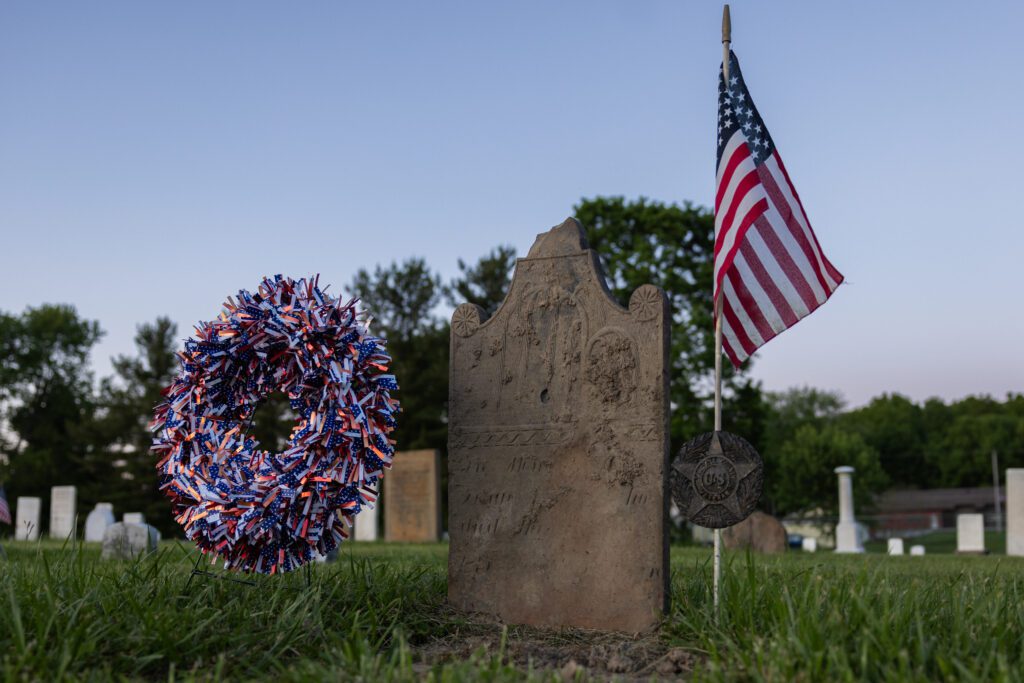
Isaac Flowers, one of Vienna Township’s first settlers, was born August 16, 1755, in New Hartford, Litchfield County, Connecticut.
After the war began in April 1775, Flowers enlisted as a private in Captain Abraham Sedgewick’s Company of Connecticut militiamen, raised after the Lexington Alarm. The regiment’s history is somewhat obscure, but Isaac’s second wife, Bathsheba, later stated in an 1855 pension application that the men “stealthily made good their retreat from Long Island to New York in the night,” indicating that Flowers was likely present at the Battle of Long Island.
On January 1, 1778, Isaac married Freelove Hopkins of West Hartford, Connecticut. The couple later moved to Granville, Massachusetts, where Freelove died in 1791 at the age of 34. The following year, Isaac married Bathsheba Burr, a distant relative of Aaron Burr.
Through his wife’s family connections, Isaac may have learned of the Western Reserve and in 1798, he took work as a surveyor.
After returning briefly to Connecticut, both Flowers and Palmer set off for the Western Reserve with their families. By the time they reached Youngstown, their wagons were in rough shape and the roads were nearly impassable. They walked the final eighteen miles to Vienna.
Soon after arriving, the Flowers family became part of local history. On November 17, 1799, Isaac and Bathsheba welcomed a daughter, Lavinia, believed to be the first child of Anglo-American heritage born in Vienna Township.
Isaac Flowers lived in Vienna Township for fourteen years. He died May 14, 1813, at only 57. Bathsheba lived another forty-two years and died in 1855, just four days shy of her 100th birthday. They are buried side by side in Vienna Township Cemetery.
Remembering Trumbull County’s Revolutionary War Veterans
The stories of Elizur Talcott Jr., Sgt. Edward Brockway, and Isaac Flowers are not the stories of generals or famous founders. They are the stories of men who served, survived, moved west, and helped build the communities that became Trumbull County.
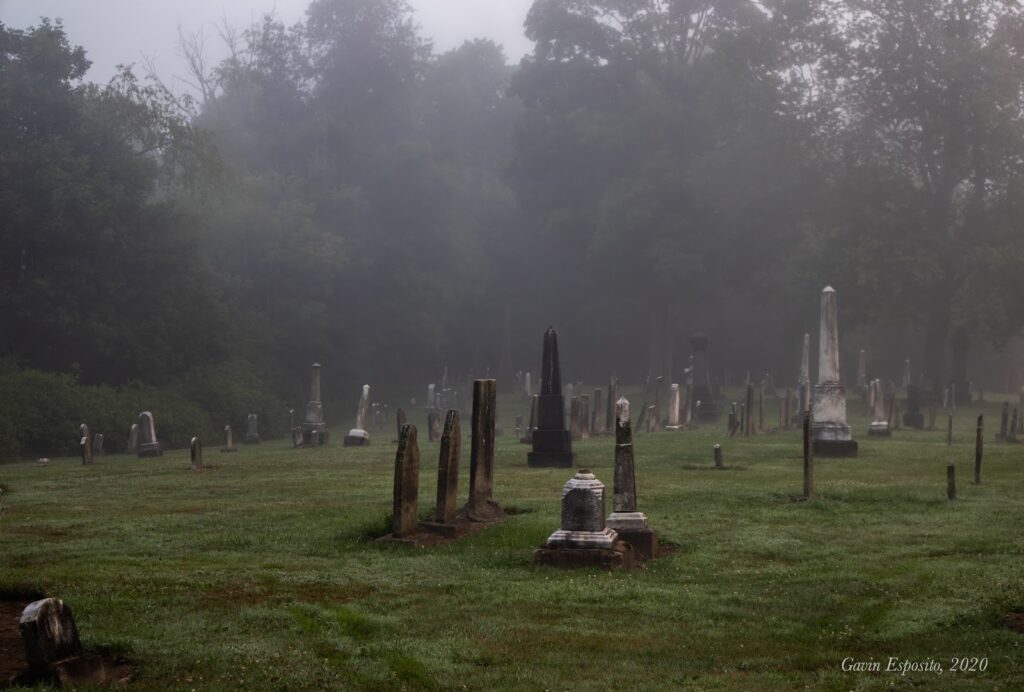
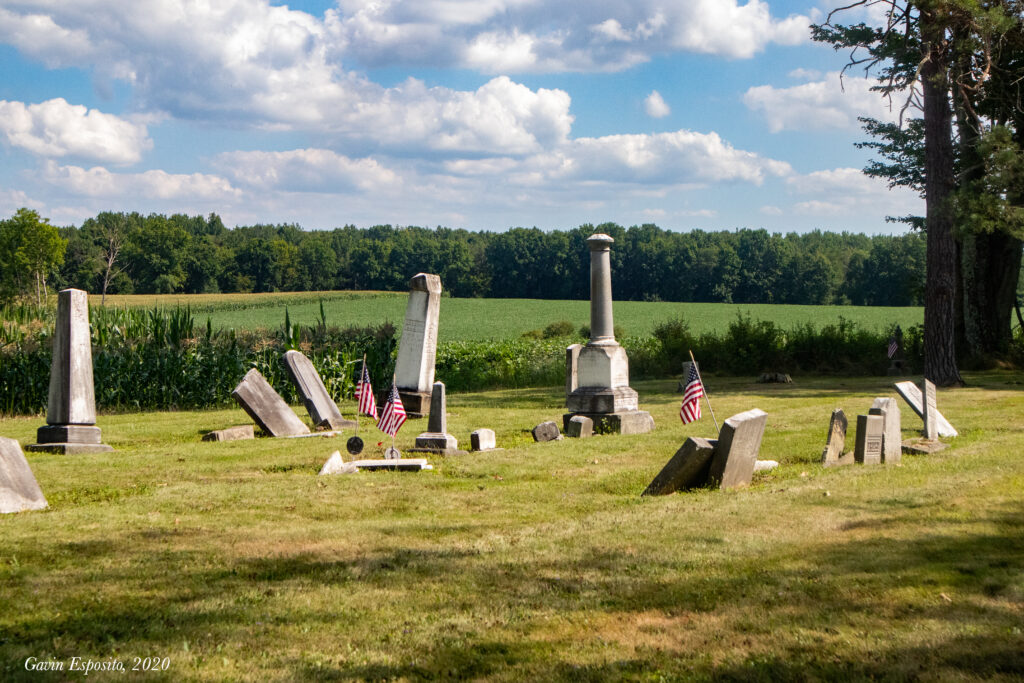
Their graves are quiet now. Their stones are simple, worn, or weathered. But their stories still connect this region to the larger story of the American Revolution and the early settlement of Northeast Ohio.
As America marks 250 years, these local histories remind us that national history is not only found in capitals, battlefields, and monuments. Sometimes, it is waiting in township cemeteries, on old roads, and in the names of the places we pass every day.
This article was summarized and edited for length. To read the entirety of the author’s original writing, click below. For Trumbull 250 education and celebrations, plan a visit to Elizur Talcott Jr.’s grave in Mesopotamia Township, Sgt. Edward Brockway’s grave in Hartford Township, and Isaac Flowers’s grave site in Vienna Township.
DISCLAIMER:
In order to preserve the headstones on this tour for the generations to come, please refrain from making grave rubbings or any other physical contact with headstones, including touching, leaning, or resting. Not only can these actions damage the stones, but destabilize them as well. As with any cemetery, be respectful to those who rest here and conduct yourself in an appropriate manner. Photography is welcomed, and encouraged: “take nothing but photos, leave nothing but footprints.”