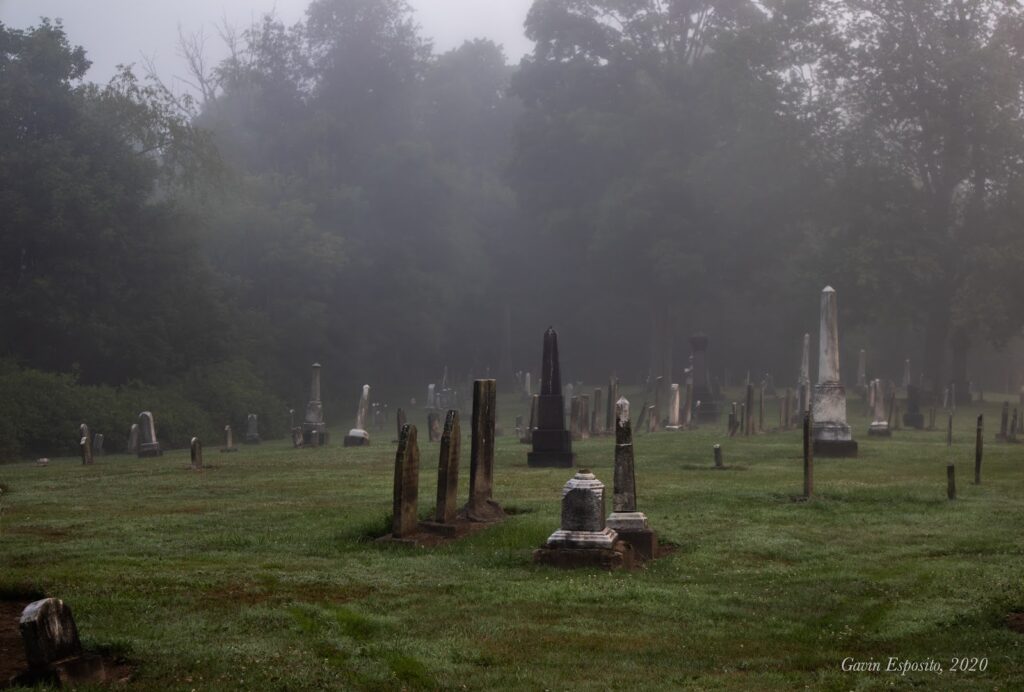
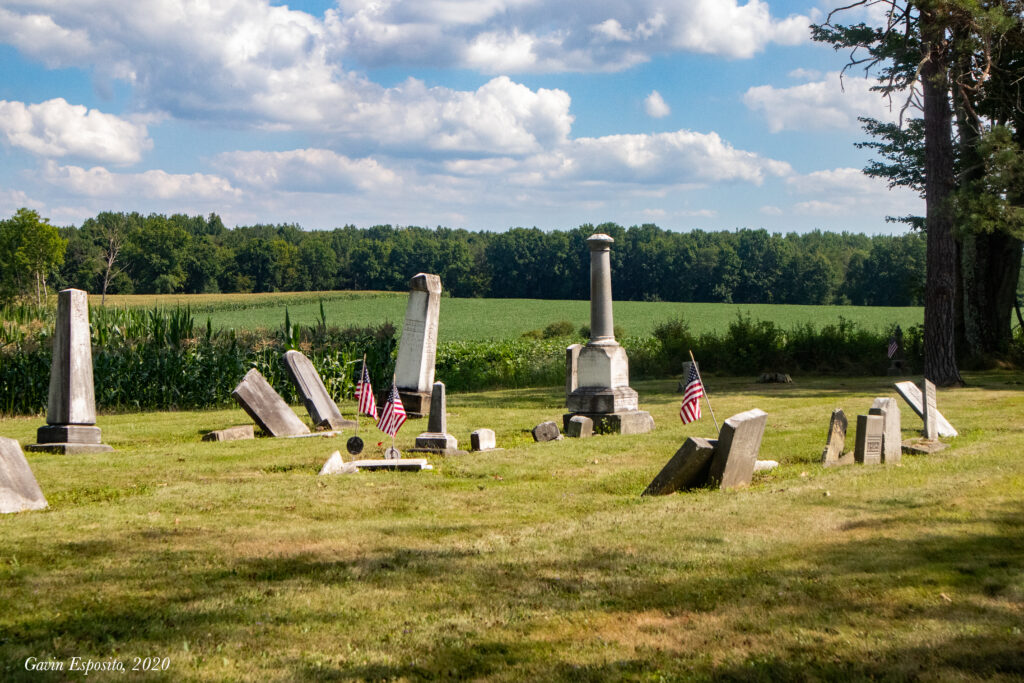
Enclosed by a stone wall atop a small shaded hillock just behind the End of the Commons General Store, the Clark Cemetery was established as a family burying ground shortly after settlement by Isaac Clark, a native of Southington, Hartford County, Connecticut who first made Mesopotamia his home in 1804.
Clark Cemetery was first utilized in 1832, 26 years after its establishment, following the death of Isaac Clark’s father, Ephriam Clark. In subsequent years and decades, more burials would follow. The last one took place in 1882, and it was Delna Bower Clark, Isaac’s son Almon’s wife. Long abandoned and overgrown, at present, the cemetery has been restored through the efforts of local volunteers.
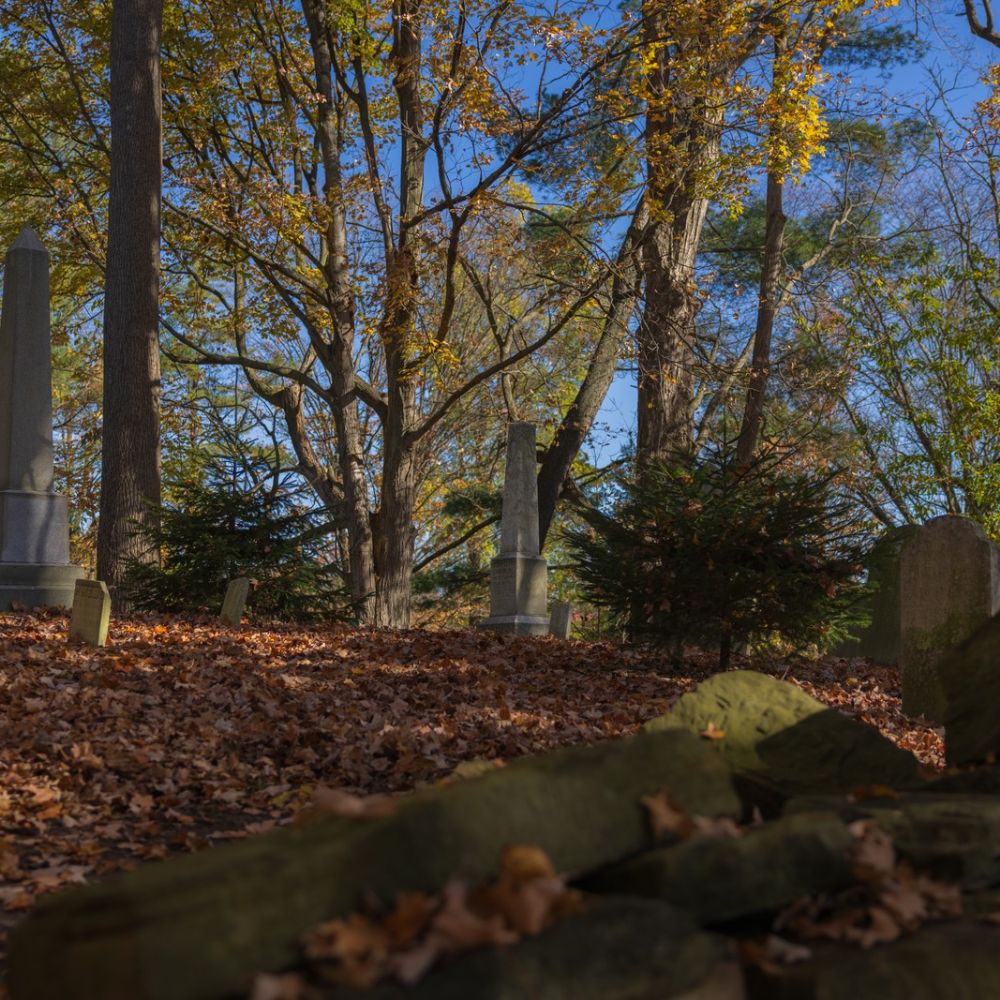
Photo: Established by Isaac Clark shortly after settlement in Mespotamia in 1804, the Clark Cemetery initially sat empty until 1832, following the death of Ephriam Clark, Isaac’s father. Presently upon the grounds of the End of the Commons General Store, the cemetery sat abandoned and overgrown; however, it was recently restored through the efforts of local volunteers. (Photo by the author).
Isaac Clark
One of five children born to Ephriam and Desrie (Blakesee) Clark, Isaac Clark entered this world on May 7th, 1774 in Southington, Hartford County, Connecticut. Little is known of his life in New England, other than the fact that on December 8th, 1796, he married Susan Gates in Westfield, Hampden County, Massachusetts. On Saturday, June 8th, 1799, after an arduous journey from Massachusetts, Isaac and Susan, plus their two-year-old son, Isaac Jr., arrived in Burton, Geauga County where they’d remain for the next five years.
Shortly after settlement, Clark, along with the help of some hired hands, erected Burton’s first mills, a grist mill and sawmill, respectively. In 1804, the family, now with another child, moved to Mesopotamia, where they settled on the southwest corner of the Commons, where Isaac engaged in farming.
Here, he erected the first frame house in the township, which in 1957 was still in existence as part of a chicken coop upon the property of W. B. Kilpatrick Sr. As nearby Fairview Cemetery wasn’t established until 1818, it was wholly on Isaac himself to set aside land for a burying ground for him and his family, doing so in about 1806. Clark Cemetery saw its first burial in 1832, that of Ephriam Clark, Isaac’s 81-year-old father.
In about 1840, Isaac erected a two-story, balconied, Greek Revival storefront with Federal influences, fondly known as the “End of the Commons.” How long the store stayed in Clark’s hands is anyone’s guess; however, throughout the 19th century, proprietors included E. H. Breadsley, Williams & Squibb, and C. F. Peck.
At present, the store is best known for being the oldest operating general store in Ohio, with its wide selection of classic candy, pop, novelties, and delicious Amish-made fry pies.
On March 22nd, 1859, at the age of eighty-six, Isaac Clark departed from this earthly realm, with the Western Reserve Chronicle noting, “He was one of the pioneers of this county and one of its best and most respected citizens.” Naturally, internment took place in the cemetery he established decades earlier, beneath a simple marble stone shared with his wife, Susan.
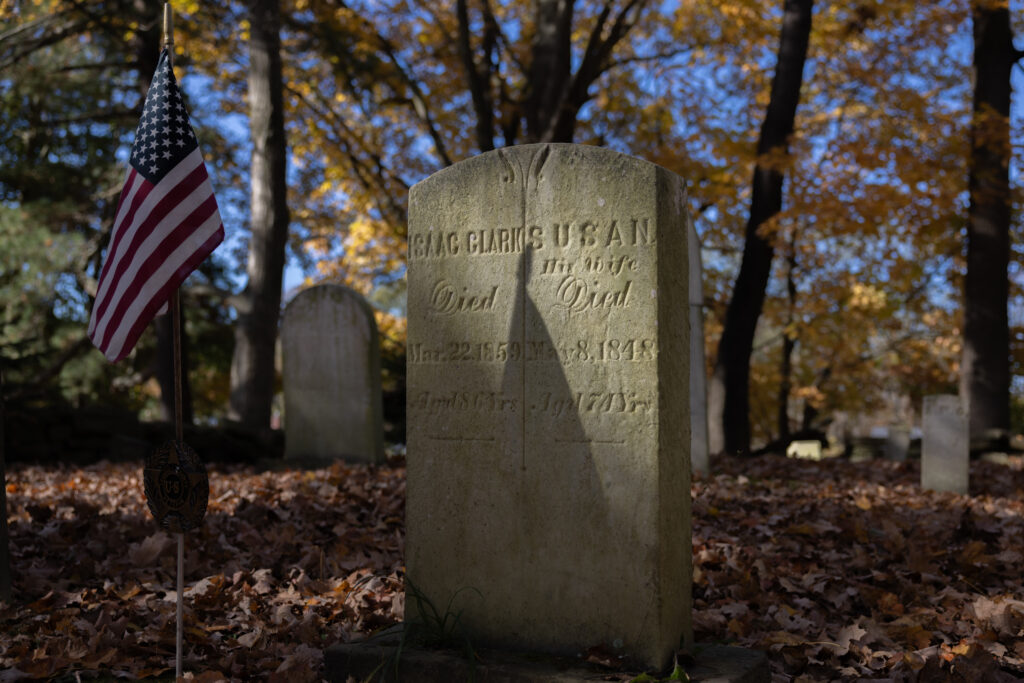
Above: The namesake of the cemetery where he now takes his earthly repose, Isaac Clark came to Mesopotamia from nearby Burton in 1804. A leading citizen of the community, perhaps Clark is best known for constructing the End of the Commons General Store, Ohio’s oldest general store, in 1840. (Photo by the author).

Photo: Established in 1840 by Isaac Clark, the End of the Commons has been a staple of Mesopotamia for over 180 years. Presently Ohio’s oldest operating general store, it is known for its selection of classic candy, pop, novelties, and delicious Amish-made fry pies. (Photo by the author)
Ruben Clark
Alifelong native of Mesopotamia, Ruben Clark was born there c. 1811, the sixth of seven children of Isaac and Susan (Gates) Clark. As a young man at the age of 24, he wed Harriet Bower on July 24th, 1836, and the two made their home in Mesopotamia, with Ruben engaging in farming. On September 25th, 1850, while returning from cutting wood, he was struck by lightning and killed. It was supposed that the axe he was carrying over his shoulder drew the fatal bolt. Ruben left his wife of fourteen years as well as five children, Lurissa, Phebe, Addie, Ruben, and James, to mourn his loss.
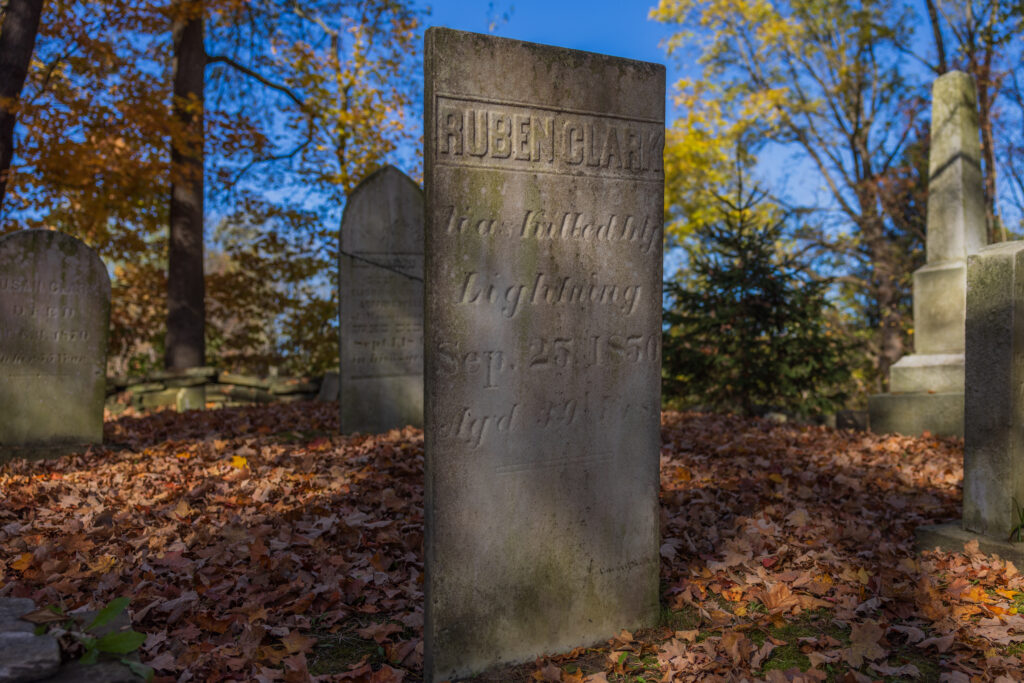
Above: A son of Isaac Clark, Ruben Clark died September 25th, 1850, when returning from cutting wood following a lightning strike. It was supposed that the axe slung over his shoulder drew the fatal bolt. He left behind a wife and five children to mourn his loss. (Photo by the author).
Isaac C. Clark
Named for his grandfather, the patriarch of the Clark family in Mesopotamia Township, Isaac C. Clark was born in 1822, the first of six children born to Isaac and Polly (Bundy) Clark. Little is known regarding Isaac’s early life; however, on November 19th, 1844, he met an untimely fate “by the explosion of a cannon” in Mesopotamia Township. The incident occurred while at a political celebration for the short-lived Locofoco faction of the Democratic Party, a radical sect opposed to almost all forms of currency.
The group had procured a cannon that malfunctioned, and Isaac, who was standing nearby, was struck on the head by a piece of the gun weighing 40 pounds and tossed about 50 feet from where he stood, killing him instantly. Another bystander, Isaac Huff, was killed in a similar manner when debris struck him in his neck, back, and arm. The Cleveland Herald noted the incident was “another sad accident from the foolish practice of resorting to cannon fire to make loud demonstrations of exultations.”
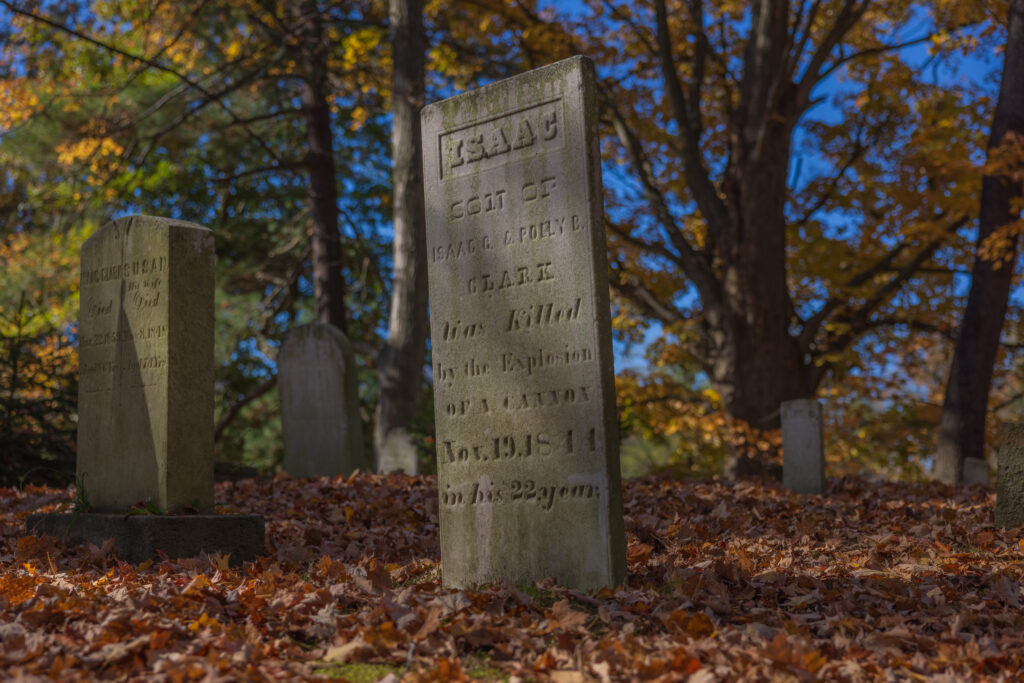
Above: grandson of Isaac Clark, Isaac C. Clark met an untimely fate on November 19th, 1844 “by an explosion of a cannon” during a political celebration in Mesopotamia. The Cleveland Herald noted the incident was “another sad accident from the foolish practice of resorting to cannon fire to make loud demonstrations of exultations. (Photo by the author).
For more in-depth information as well as works cited by the author, please click the button below.